The letter changes the operating problem.
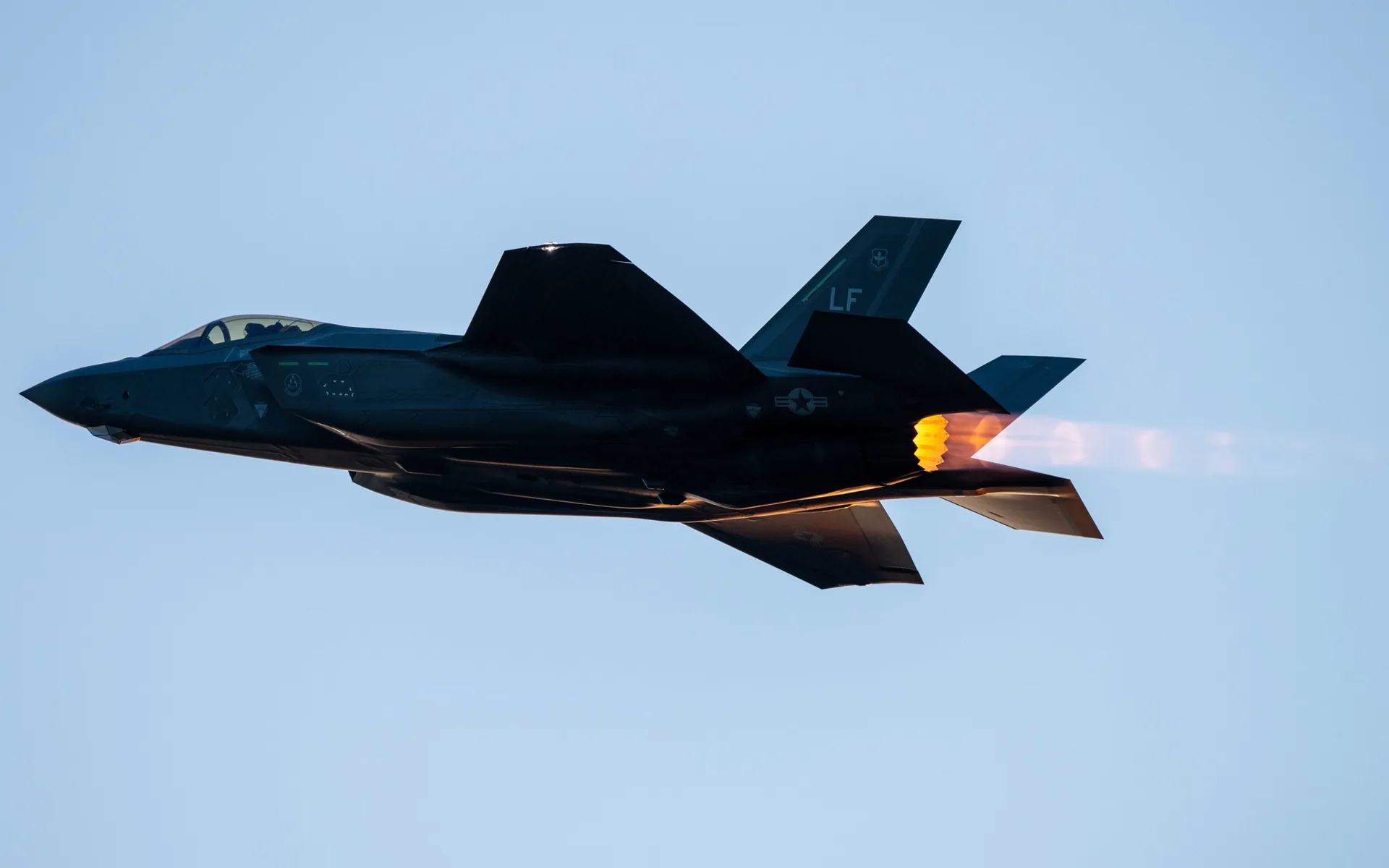
The F-35A uses conventional takeoff and landing. The F-35B is designed for short takeoff and vertical landing, including operations from suitably equipped amphibious ships and expeditionary airfields. The F-35C is the carrier variant; its larger wing surfaces and reinforced landing gear support the demands of catapult launches and carrier recoveries. These are purposeful configurations for different operating environments, not trim levels on an otherwise identical product.
That distinction should lead every comparison. A video of a vertical landing illustrates the B model’s design, not a capability shared by every F-35. A carrier-deck image needs a variant check before its caption is generalized. The primary references below describe the designs; the historical test articles are evidence of their physical distinctions, not claims that those tests are happening now. The interactive comparison is a guide to operating concepts, rather than a ranking of combat effectiveness.
The aircraft is also an information system.
The Air Force describes the F-35A around stealth, integrated sensors, information fusion and communications. Its fact sheet identifies the Distributed Aperture System, Electro-Optical Targeting System and helmet display among the aircraft’s features. Sensor fusion brings information together for the pilot; tactical data links support sharing with other platforms. The useful idea is the relationship among sensing, interpretation and action, rather than an isolated specification.
A public explanation should stay within that evidence. A promotional phrase about awareness does not establish the outcome of a particular engagement. Nor does a striking cockpit image tell the reader which software configuration or connected forces were present. Ask what the source actually demonstrates. An exercise may document integration in its stated conditions. A test may establish a narrower result. This distinction preserves interest in the technology while keeping claims anchored to an identifiable event and configuration.
A production milestone answers a specific question.
In its May 2024 assessment, GAO reported that the F-35 program reached full-rate production in March 2024 following the completion of required simulated testing. The same report described late aircraft and engine deliveries and modernization challenges. Those findings can coexist because a production decision and the delivery performance of a manufacturing system are different measures.
Treat every milestone as a defined decision with a date. Production, government acceptance, delivery to a unit and the unit’s ability to carry out assigned missions should not collapse into one undifferentiated claim that the program is “done.” For an acquisition story, identify the decision and its scope. Then look separately for evidence about schedule, configuration and support. The 2024 report is historical evidence of the program at that assessment; it is not presented here as a live production dashboard or the latest delivery count.
An upgrade is a chain of dependencies.
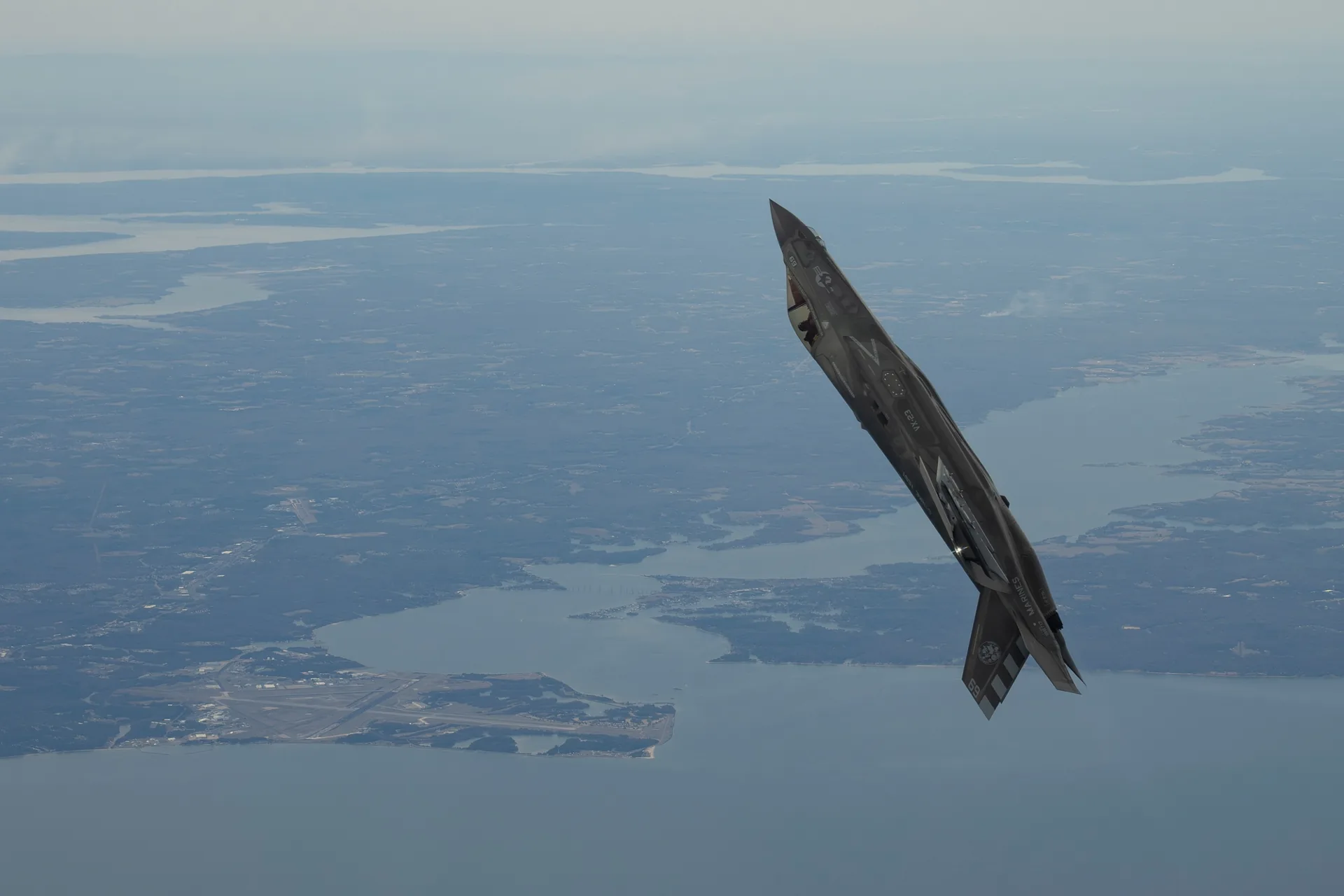
An aircraft family can remain in production while its capabilities continue to change. GAO’s May 2024 report examined delays in Technology Refresh 3, the hardware and software supporting modernization, alongside the broader Block 4 effort and engine and thermal-management needs. Its findings show why a single new feature should not be treated as independent of the systems needed to host, power, cool and test it.
When reading an upgrade announcement, distinguish a development objective from a demonstrated result and a fielded configuration. Ask which aircraft receive the change, what testing supports it and whether the source describes a plan or a completed action. The connection is an analytical reading method, not an assertion that every dependency is currently unresolved. Historical reports explain how programs evolve; dated follow-up evidence is required before declaring that a particular problem persists or has been solved.
The sortie begins before the aircraft moves.
Maintainers, replacement parts, repair capacity, technical information and planning all sit behind the image of a jet taking off. Fleet Readiness Center East describes its depot-level F-35B repair and modification work and its work with the A and C variants. That is a concrete reminder that aircraft support includes a wider repair network, not only the personnel standing on a squadron flight line.
GAO’s April 2024 sustainment assessment found increasing projected support costs alongside lower planned use and availability. These were dated program findings, not today’s fleet statistics. For a reader, the durable lesson is to separate capability from availability: what an aircraft is designed to do and whether it is ready to perform the relevant mission are distinct questions. A maintenance or readiness figure needs its definition, variant, population and reporting period before it can support a meaningful comparison.
Make every image and claim answerable.
For the next F-35 story, keep five fields together: variant, location, event date, configuration if known, and source. State when a source leaves something unspecified. Training imagery can illustrate aircraft operations, but it should not be relabeled as combat footage. A dated photograph also cannot substantiate a present-day readiness rate or a newly announced upgrade.
Read the aircraft as both a platform and a supported system. That gives you room to examine engineering achievements, production constraints and the work of sustaining a fleet without turning the story into either an advertisement or a verdict based on one number. Start with the design, examine the documented event and follow the support behind it. The resulting account is more useful because each conclusion has a visible path back to evidence.
The field glossary.
- CTOL
- Conventional takeoff and landing: the F-35A operating concept.
- STOVL
- Short takeoff and vertical landing: the F-35B operating concept.
- Carrier variant
- The F-35C, configured for catapult launches and arrested carrier recoveries.
- Sensor fusion
- Combining information from sensors into a more integrated picture for the operator.
- Configuration
- The relevant hardware and software state of a particular aircraft. A family name alone does not identify every installed capability.
- Sustainment
- The support, maintenance and repair work required to keep a weapon system usable through its service life.
The source record.
Read the documents behind the feature. Publication dates and the scope of each source matter.
- U.S. Air Force — F-35A Lightning II
Official fact sheet used for stable design and systems descriptions. The fact sheet is not used for current fleet totals or logistics status.
- U.S. Marine Corps — Aircraft Facts
Official F-35B description covering short takeoff and vertical landing and its operating environments.
- NAVAIR — F-35B ship integration
February 2022 account identifying the STOVL variant and the work of adapting ship operations.
- NAVAIR — F-35C distinctions
December 2011 historical test article used only for enduring airframe-design distinctions.
- GAO-24-106909
May 16, 2024: full-rate production, deliveries and modernization. Historical assessment; not a current fleet-status claim.
- GAO-24-106703
April 15, 2024: sustainment costs, use and availability. Historical assessment; no present-day numerical rates are inferred.
- Fleet Readiness Center East — F-35
Official description of depot repair and modification work.